Containment that fits the situation
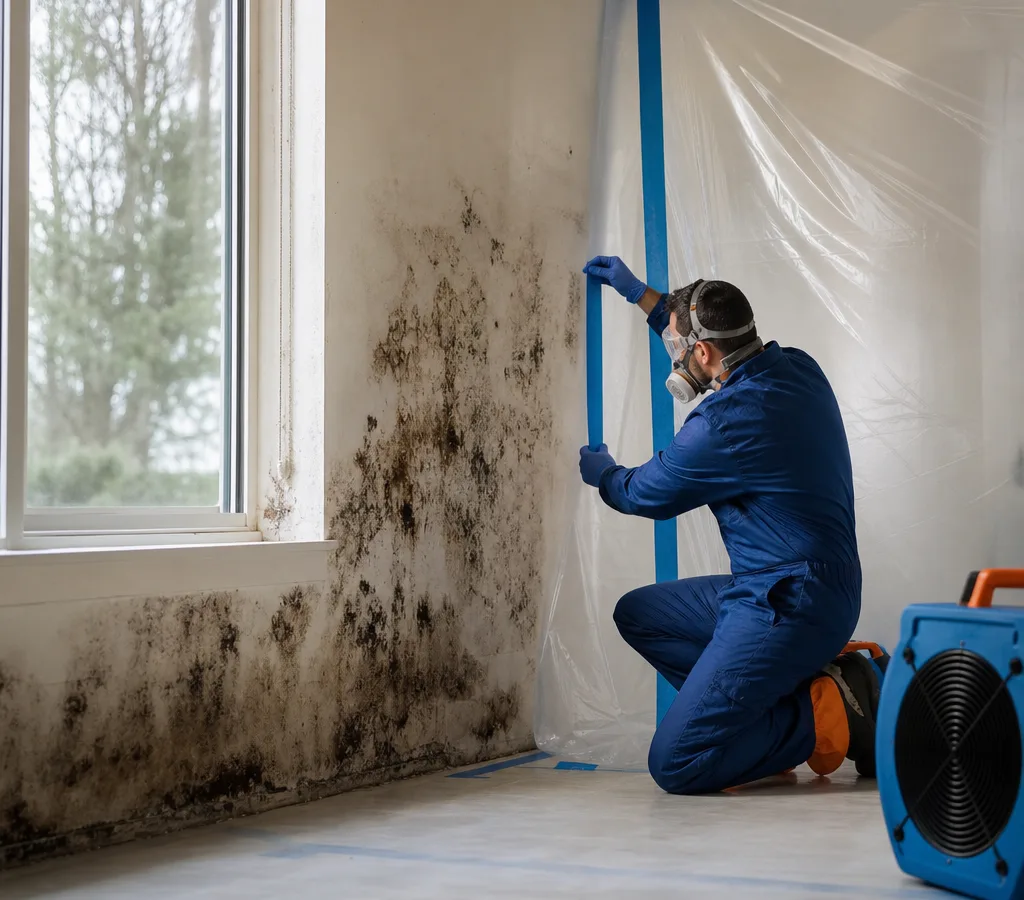
Small, isolated areas may need localized containment; larger or more active growth may require full critical barriers and negative air to keep spores from moving into clean rooms.
Serving Fairfax, Virginia & surrounding areas
24/7 Emergency Response
One call instead of ten No web forms, no callback spam 24/7 Emergency Response
Mold Removal · Fairfax, VA
If you smell musty odors, see staining, or had a recent leak, get a clear plan for inspection, containment, removal, and prevention. Our Fairfax team focuses on safe work practices and straightforward scopes so you know what will happen before anything starts.
Contain The Area And Correct The Moisture
Searching for mold removal Fairfax VA usually means you already have a concern: a damp basement smell, spotting on drywall, or worry after a plumbing leak. Mold cleanup is part construction, part contamination control. The goal is to remove affected materials safely, clean remaining surfaces correctly, and stop the moisture source that allowed growth in the first place.
We handle mold removal in Fairfax with a work plan built around the IICRC S520 approach: identify the affected area, set containment, protect the rest of the home, remove contaminated porous materials where required, clean and HEPA-filter the air, and verify conditions before the area is closed back up. If you also need help understanding related moisture issues, Water Damage Fairfax VA is the local team behind this service.
Professional Remediation Standards
Small, isolated areas may need localized containment; larger or more active growth may require full critical barriers and negative air to keep spores from moving into clean rooms.
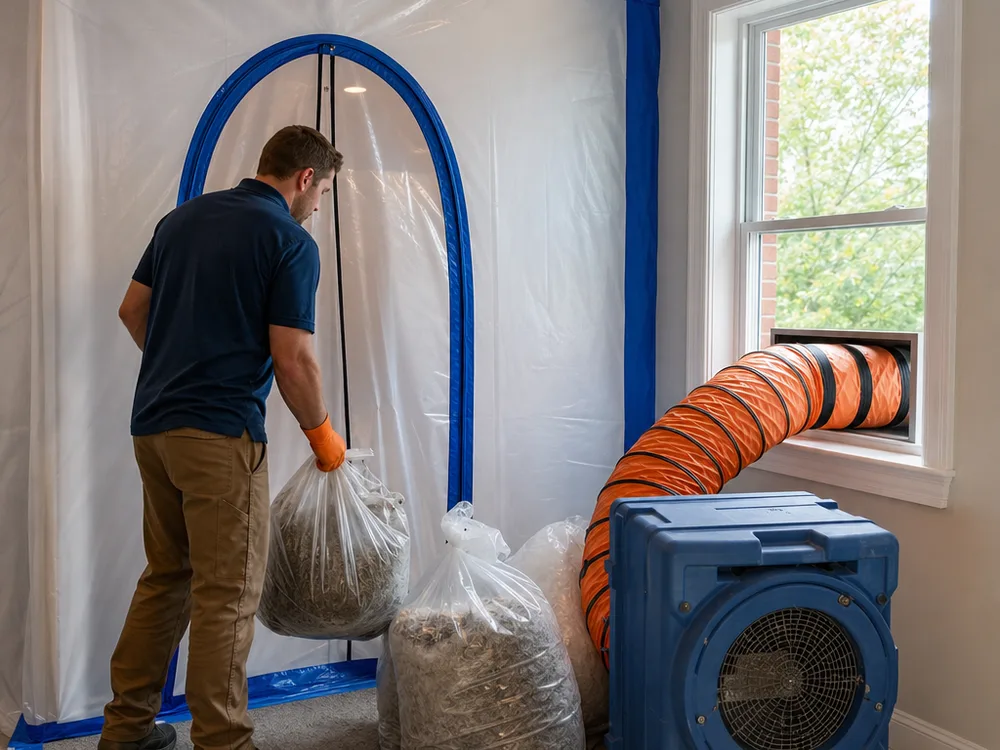
Mold cleanup often means removing drywall, insulation, carpet pad, or baseboards that cannot be cleaned. HEPA air scrubbers and HEPA vacuums reduce cross-contamination during the work.
Non-porous and semi-porous surfaces can often be cleaned with appropriate antimicrobial solutions and abrasion when needed. Porous materials that are visibly colonized usually come out.
You do not want to rebuild over damp framing. Moisture readings help confirm drying targets are met before repairs move forward.
A written scope should spell out what gets removed, what gets cleaned, what stays, where containment runs, and what is excluded so expectations are aligned.
Containment, Removal And Prevention
Fairfax has a mix of older homes, townhomes, and newer builds. In any of them, mold most often shows up where moisture hangs around: under sinks, behind toilets, around HVAC condensate lines, in basements after seepage, or behind drywall after a roof or pipe leak.
Our mold removal process starts with a practical inspection of the suspected area and the conditions around it. We look for visible growth, water staining, elevated humidity, and materials that trap moisture, including insulation, carpet pad, and cellulose products. If the situation warrants it, we set up containment with plastic sheeting, maintain negative pressure, and protect pathways used for debris removal.
Removal and cleaning is then matched to what is actually affected. Drywall and insulation with active growth are usually removed. Remaining framing may need HEPA vacuuming and detailed cleaning. After cleanup, we recommend the moisture fix that prevents a repeat. In Fairfax, that is often bathroom ventilation, correcting small plumbing leaks, improving basement dehumidification, or addressing exterior drainage where water is getting in.
If the concern is primarily odor with no visible growth, inspection still matters. Musty smells can come from hidden cavities, crawlspaces, or damp building materials, and the work plan should target the source instead of fogging a room and hoping it goes away.
From Inspection To Verification
We review the affected area, likely moisture source, and materials involved. You get a clear scope of what will be removed, what can be cleaned, and what protection steps will be used.
We isolate the work zone with barriers and, when appropriate, establish negative air and HEPA filtration to limit spore movement to adjacent rooms.
Contaminated porous materials are carefully removed and bagged for disposal. The goal is to eliminate the growth reservoir, not cover it.
We HEPA vacuum, wipe, and scrub as needed based on the surface type. The right method depends on whether a surface is non-porous, semi-porous, or porous.
We confirm the area is dry enough to rebuild and review prevention steps. If repairs are planned, this is the point where rebuild can safely start.
Typical Project Range
Mold removal in Fairfax typically ranges from about $800 to $3,500 for common residential projects, with larger or multi-room remediation and rebuild-related demolition often running $4,000 to $10,000+. Small, isolated cleanups are at the low end; jobs requiring full containment, negative air, and removal of multiple materials trend higher.
Final pricing depends on the size of the affected area, what materials are involved, including drywall, insulation, and flooring, how hard the area is to access, whether moisture is still present, and how much containment is required to protect the rest of the home. The exact cost is confirmed after an on-site inspection and written scope.
If you need mold removal in Fairfax, start with an inspection and a written scope so you can make a decision with real information: what is affected, what gets removed, how the area is contained, and what prevents the mold from coming back.
Call for Emergency HelpCustomer Proof
“We had a musty smell in the basement that got worse after heavy rain. The crew set up containment, removed the affected drywall and insulation, cleaned the framing, and explained what needed to change with humidity control. The work area stayed clean and the smell was gone.”
“After a small leak under the kitchen sink we found mold behind the cabinet toe kick. They opened the area neatly, used air filtration, and gave us a clear scope before starting. No pressure, just a straightforward plan.”
Answers Before Work Begins
Contain The Problem At Its Source
Tell us what you are seeing and where it is happening. We will inspect the area, explain the containment plan, and provide a written scope with clear pricing before work begins.